Dragon Lady Holly Care: Growth, Pollinators, and Best Uses

Introduction
Dragon Lady Holly, specifically the female cultivar of Ilex × aquipernyi, offers a distinctive balance of structural appeal and seasonal color. Known for its upright, slender pyramidal habit and glossy, dark green foliage, this holly is sought after by designers who require strong vertical lines and privacy screens without sacrificing lateral space. Its compact, narrow form makes it uniquely suited for constrained areas, such as along side yards or between tall fences. However, successfully integrating Dragon Lady Holly into a landscape requires understanding its specific biological needs, particularly concerning light, soil chemistry, and its unique pollination requirements.
Optimal Conditions for Growth and Form

To achieve the desired symmetrical, narrow pyramid shape, Dragon Lady Holly requires consistent, well-managed care. The plant’s maintenance focuses on achieving the perfect balance between moisture and drainage, as it thrives in specific soil conditions.
Light and Site Selection
This species performs best when situated in full sun, which promotes the robust growth and dense foliage characteristic of the Dragon Lady variety. While it can tolerate some partial afternoon shade, full sun is generally preferred to maximize its ornamental potential and encourage healthy, glossy leaves throughout the growing season.
Soil and Water Management
Dragon Lady Holly prefers acidic, moist, and well-drained soils. The acidic requirement is crucial for optimal nutrient uptake. Consistent watering is necessary during establishment and during periods of high heat to ensure the moisture level does not drop too low, which can hinder its growth rate.
Applying a layer of organic mulch is a highly practical approach to maintenance. Mulch serves multiple functions: it retains vital soil moisture, moderates soil temperature, and helps suppress weeds, allowing the plant to focus its energy on developing its structural integrity and foliage.
Understanding Pollination and Berry Production
One critical aspect of Dragon Lady Holly that often confuses new owners is its reproductive cycle. This plant is dioecious, meaning it has separate male and female specimens.
The Role of the Pollinator
As a female cultivar, Dragon Lady Holly can produce vibrant scarlet fruits in the fall and winter, but only if it is successfully pollinated. To set fruit, a compatible male *Ilex × aquipernyi* plant must be positioned nearby. Without this genetic match, the plant will produce healthy, vigorous foliage but will not develop the distinctive red berries.
A careful evaluation of your landscape design should therefore consider not just the aesthetic impact of the plant, but also its biological completeness. If berry production is a key factor in your planting decision, ensuring a nearby male counterpart is mandatory.
Growth Rate and Physical Dimensions

Dragon Lady Holly is celebrated for its height and narrow profile, making it an excellent choice for space-saving plantings. It reaches its mature size gradually, but its defining characteristics appear once it is fully established.
| Attribute | Description |
|---|---|
| Mature Height | 10 to 20 feet |
| Mature Width | 4 to 6 feet |
| Foliage | Deep green, glossy, spiny, evergreen |
| Growth Habit | Upright, narrow, pyramidal |
The slender, narrow form dictates its use. While it achieves substantial height, its restricted width ensures it can function effectively as a vertical screen or a dramatic foundation plant without overwhelming a narrow garden bed.
Practical Landscape Applications
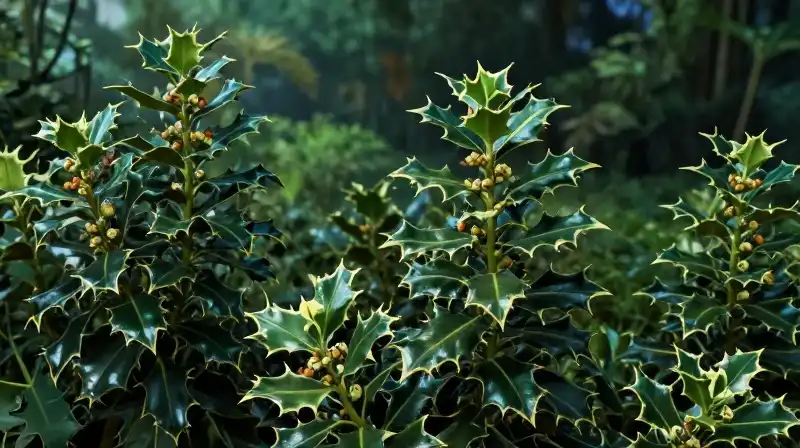
Dragon Lady Holly is more than just a decorative element; it is a functional landscaping tool due to its resilience and structure.
Privacy and Screening
Its ability to grow tall while remaining very narrow makes it a premier choice for creating living fences or screening boundaries. The density of its evergreen foliage provides continuous visual screening throughout the year, offering a more polished look than traditional, more spreading shrubs.
Resilience and Placement
Once properly established, Dragon Lady Holly is noted for its general durability and its resistance to deer. Its polished appearance and symmetrical shape allow it to be used successfully in both formal, structured designs and in more traditional landscape layouts.
Maintenance and Long-Term Care
While generally considered self-sustaining, certain practices can enhance the health and appearance of your Dragon Lady Holly.
- Winter Pruning: While not strictly necessary, light pruning in the dormant season can help maintain the tight, symmetrical shape, particularly if it begins to spread laterally.
- Deer Resistance: Although it is noted as being deer-resistant once established, newly planted specimens should be protected until their foliage and structure are well-developed.
- Soil Acidity: Regular checks to ensure the soil maintains an acidic pH are vital to prevent nutrient deficiencies over the long term.
Deciding on Dragon Lady Holly: A Synthesis
Choosing Dragon Lady Holly requires a clear understanding of its specific requirements—it is a plant of intention. Before planting, evaluate your site for its ability to provide consistent full sun and the capacity for maintaining acidic soil. Beyond the aesthetic appeal, consider the biological nuance of the dioecious nature; if you desire the ornamental red berries, a male partner must be integrated into your planting plan. When positioned correctly, its verticality and resilience make it a highly valuable choice for modern, constrained gardens, providing both privacy and a strong evergreen presence.
Frequently Asked Questions
What are the disadvantages of holly trees?
Because the plant is dioecious, female cultivars will only produce red berries if a compatible male Ilex × aquipernyi plant is positioned nearby. Additionally, the species requires consistent care, such as maintaining acidic soil and adequate watering, to prevent hindered growth and nutrient deficiencies.
Does dragon lady holly need a pollinator?
The female cultivar of Dragon Lady Holly requires pollination from a compatible male Ilex × aquipernyi plant to produce vibrant scarlet fruits. Without this specific genetic match, the plant will produce foliage but will not develop the distinctive red berries.
How do you care for Dragon Lady Holly?
Dragon Lady Holly thrives in full sun and acidic, moist, and well-drained soil, requiring consistent watering and the application of organic mulch. To set red berries, a compatible male Ilex × aquipernyi plant must be positioned nearby.
Growing and Maintaining Dragon Lady Holly
Assess Site Conditions
Evaluate your intended planting area to ensure it receives consistent full sun and has the capacity to maintain consistently acidic soil.
Plan Reproductive Cycle
Determine if you wish to grow red berries, which requires planting a compatible male Ilex x aquipernyi specimen nearby, as the species is dioecious.
Plant and Mulch
Plant the Dragon Lady Holly in acidic, moist, and well-drained soil, applying a layer of organic mulch to retain moisture and moderate temperature.
Manage Water
Ensure consistent watering during the establishment phase and throughout periods of high heat to prevent the soil moisture from dropping too low.
Monitor Soil Acidity
Conduct regular checks to verify that the soil maintains its acidic pH level to ensure proper nutrient uptake over the long term.
Perform Maintenance Pruning
Perform light pruning during the dormant winter season if necessary to help maintain the plant's tight, symmetrical, and narrow pyramidal shape.
Related Articles