Junior Giant Thuja: The Best Privacy Screening Tree for Urban Landscapes

Introduction
The Junior Giant Thuja tree has cemented its reputation as a highly effective solution for providing dense, year-round screening in constrained environments. While larger arborvitaie species can dominate expansive properties, the Junior Giant variety fills a specific niche: delivering substantial privacy and structural integrity within the limited space of urban backyards, patios, and narrow city plots. This evergreen tree is engineered to offer a robust, uniformly dense screen, making it a practical and visually appealing choice for landscape architecture that requires both low maintenance and high visual impact.
Its appeal lies in its ability to combine strong resilience with a manageable mature size. It is designed for homeowners who require the look of a towering, solid privacy barrier but cannot accommodate the significant growth or expansive footprint of a standard Giant Arborvitaie. Understanding its specific performance characteristics—from its hardiness limits to optimal spacing—is crucial for maximizing its effectiveness in a demanding urban landscape.
Screening Performance and Foliage Characteristics
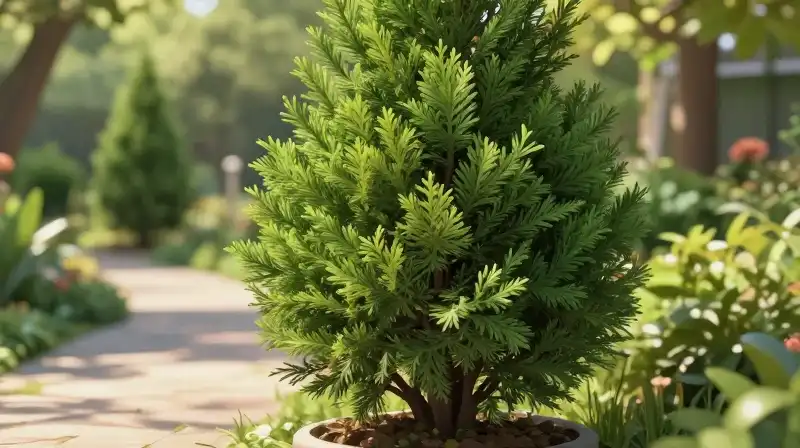
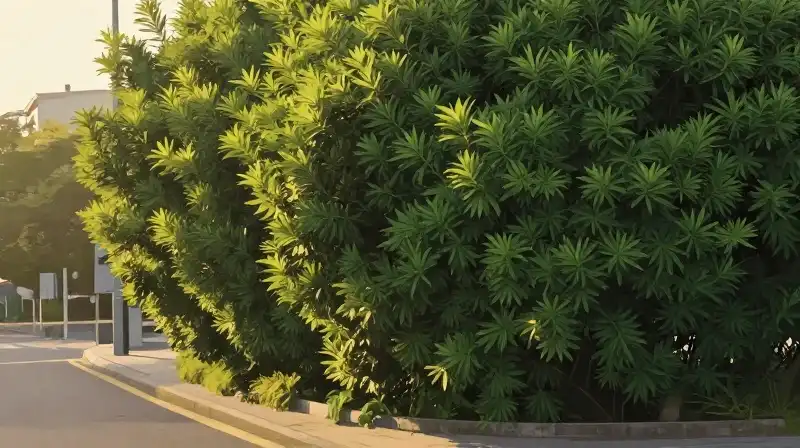
One of the primary functions of the Junior Giant Thuja tree is providing an impenetrable barrier. Its foliage is characterized by a deep, vibrant green hue and a soft, dense texture that remains consistent throughout the seasons. Unlike some species that develop bare patches or thin sections in winter, this variety maintains its coverage, offering constant privacy.
Density and Growth Rate
The density of the Junior Giant Thuja is its most critical feature for a privacy screen. Its compact, upright habit allows the branches to grow close together, minimizing gaps between trees. When planted at appropriate intervals, the canopy merges into a solid visual wall. Its growth rate is steady, meaning it achieves screening maturity without the aggressive, sometimes unpredictable expansion of larger cultivars. This predictability is invaluable for urban planning and property management, allowing you to estimate when your desired height will be reached.
The tree maintains a strong, uniform, and symmetrical shape. This neat form allows it to serve dual purposes—as a functional privacy screen and as a defined, structured element within a formal garden design.
Hardiness and Urban Resilience
Urban environments present unique challenges, including heat island effects, unpredictable soil conditions, and fluctuating temperatures. The Junior Giant Thuja possesses high resilience, making it well-suited for these conditions. It is a cold-hardy species, capable of surviving freezing temperatures down to -10°C, allowing it to thrive in most temperate climates.
Adaptability to Challenging Conditions
Beyond cold tolerance, the tree is adaptable to heat and humidity. While it thrives in well-drained conditions, its robust root system allows it to establish stability even when dealing with compacted city soil or areas prone to occasional drought. Furthermore, its resistance to heavy snow and its ability to manage varied moisture levels ensures its longevity in many different landscape scenarios. This adaptability reduces the likelihood of replacement, offering a long-term, reliable investment for urban properties.
Practical Planting and Growth Considerations
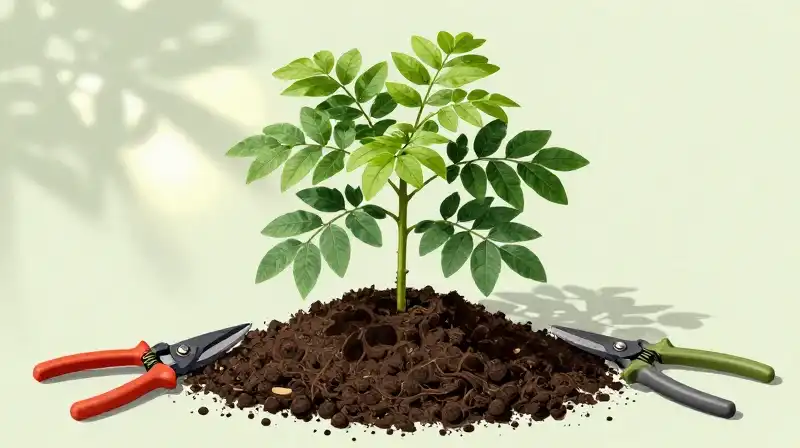
Successfully integrating the Junior Giant Thuja into a landscape requires careful planning regarding spacing and placement. Improper planting can lead to weak growth or failure to screen effectively.
Ideal Spacing and Height Expectations
The Junior Giant Thuja typically reaches a maximum mature height between 15 to 20 feet. This height provides significant privacy while remaining a medium-sized tree, fitting better into narrower residential spaces than larger variants. To achieve maximum screening effectiveness, spacing is critical. While specific requirements depend on the desired density, planting them closely enough allows their crowns to knit together, creating a seamless screen. Always consult local growing guides for optimal spacing relative to your microclimate, but remember that closer placement accelerates the screening process.
- Sunlight: Performs well in full sun but can still thrive in partial shade.
- Soil: Requires good drainage; highly tolerant of various soil types.
- Water: Needs consistent watering during the initial establishment phase, especially in drought conditions.
Maintenance and Lifecycle
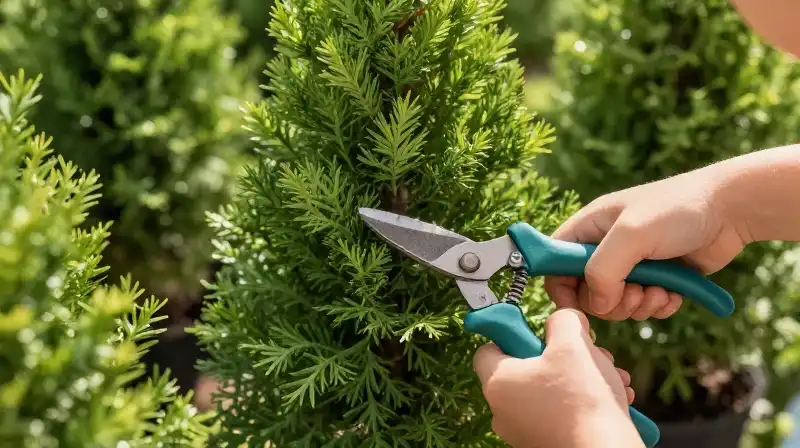
One of the most appealing factors of the Junior Giant Thuja is its low maintenance requirement once it is mature. Because of its inherent growth habits and robust structure, it seldom requires significant pruning. The focus of care shifts from constant reshaping to general health monitoring.
Long-Term Care
Minimal maintenance is needed, primarily consisting of:
- Ensuring adequate water during dry spells.
- Removing fallen debris (natural shedding).
- Light trimming only if the canopy becomes excessively dense or interferes with overhead structures.
The tree’s consistent green color and hardiness mean that typical issues like major browning or extensive pest damage are less common, reducing the overall labor cost of ownership.
Decision Criteria: Thuja vs. Screening Needs
When deciding if the Junior Giant Thuja is the right choice for your space, consider these practical evaluation signals:
| Feature | Junior Giant Thuja | Alternative Screening Options (e.g., tall hedges) |
|---|---|---|
| Maintenance | Very Low (minimal pruning needed) | Variable (often requires regular shearing) |
| Growth Shape | Upright, Uniform, Defined | Can be looser, more irregular, or require shaping |
| Screen Density | Very High, Evergreen all year | Dependent on specific variety and season |
| Footprint | Compact, manageable urban size (15-20 ft) | Can be significantly larger or more invasive |
Practical Guidance: Planting in Containers vs. Ground
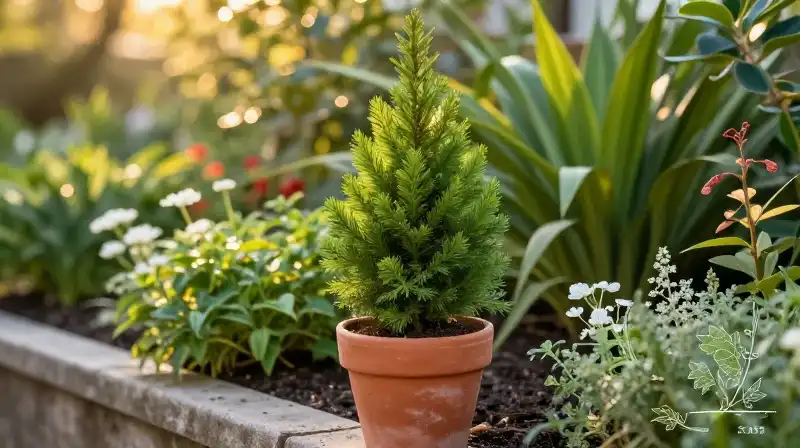
The Junior Giant Thuja is versatile and can be successfully utilized in multiple planting scenarios. While ground planting offers the most stability and best access to the full root system, its suitability for container gardening is a major advantage for patios and terraces.
When planting in containers, proper selection of a large pot is essential to accommodate its robust root system and provide enough stable soil for the plant to thrive. Container gardening allows for flexible placement—perfect for defining small outdoor living areas. However, be aware that container-grown trees require more vigilant watering and may need to be moved seasonally to ensure they receive adequate light.
Summary of Use and Application
The Junior Giant Thuja excels as a dependable, architecturally sound solution for privacy screening. It is not merely a decorative planting; it is a functional tool for shaping urban space. If your primary goal is to establish a dense, clean, and enduring screen that resists the rigors of urban living with minimal intervention, this species is exceptionally well-suited for the task. Its medium size avoids the commitment of a massive tree, providing a perfect balance of visual impact and manageable scale for the modern homeowner.
How to Maintain a Junior Giant Thuja
Water Management
Ensure adequate water during dry spells.
Debris Removal
Remove fallen debris (natural shedding).
Trimming
Lightly trim the tree only if the canopy becomes excessively dense or interferes with overhead structures.
Related Articles