
Driveway Landscaping Ideas: Selecting the Perfect Paver Design

Introduction
Transforming a driveway from a basic functional space into a visually stunning landscape feature requires careful material selection. Pavers offer an unparalleled solution for driveway landscaping ideas because they blend high functionality with diverse aesthetic possibilities. Unlike poured concrete, pavers allow for intricate design, superior drainage, and the ability to harmonize with existing architectural styles. Whether you are looking for modern driveway ideas or unique rural driveway entrance ideas, the final choice of paver dictates the character, durability, and long-term maintenance needs of the entire property.
Matching Pavers to Architectural Style
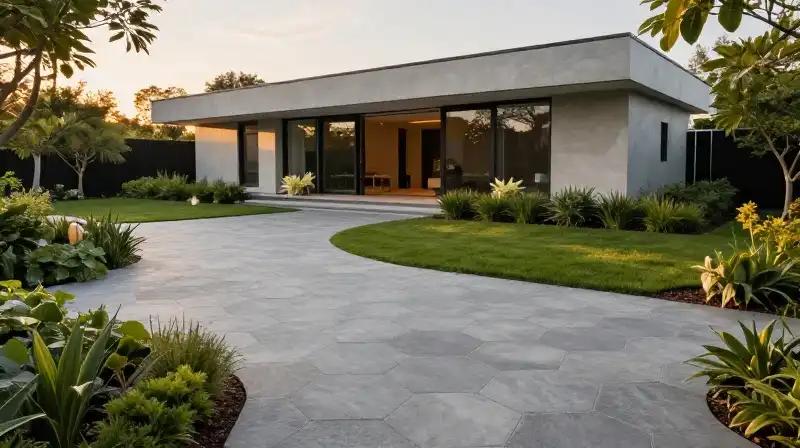
The most effective driveway design aligns seamlessly with the home’s existing structure. To select the perfect paver, first analyze the architectural style of your home to determine which paver aesthetic will create the most cohesive look.
Modern and Contemporary styles benefit from sharp lines and monochromatic or linear patterns. In contrast, traditional or classic homes are best served by richly textured, multi-tonal pavers that evoke heritage. This consideration of harmony ensures the driveway feels like a deliberate extension of the property, rather than a separate addition.
- Modern: Choose large format, geometric pavers in muted grays, blacks, or whites. Solid colors and minimal patterning emphasize clean, sharp silhouettes.
- Traditional: Opt for classic brick or cobblestone patterns with a variety of earthy tones (deep reds, browns, and tans). These materials suggest permanence and classic craftsmanship.
- Rustic/Farmhouse: Select natural stone-look pavers, often irregular in size or shape, in weathered, organic tones. These complement natural settings and large, sprawling properties.
Functional Pavers for Small and Specific Spaces
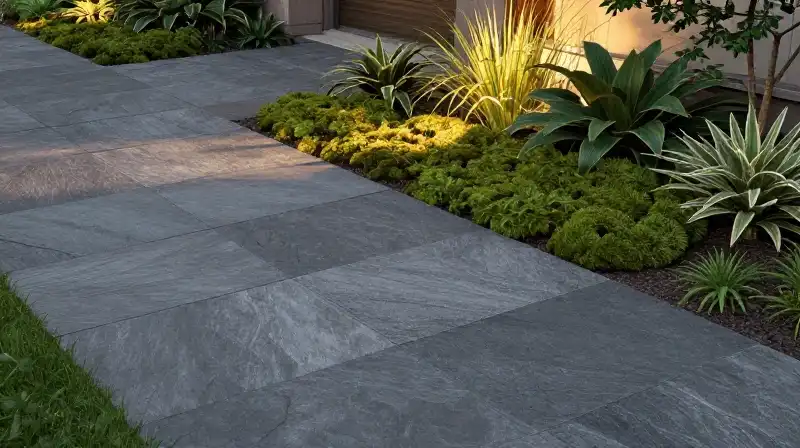
Not all driveways are uniform. Depending on the physical constraints of your lot, certain paver types or configurations are ideal. Whether managing a small front yard driveway or designing a highly trafficked entry point, the design must respect the space it occupies.
Optimizing Space
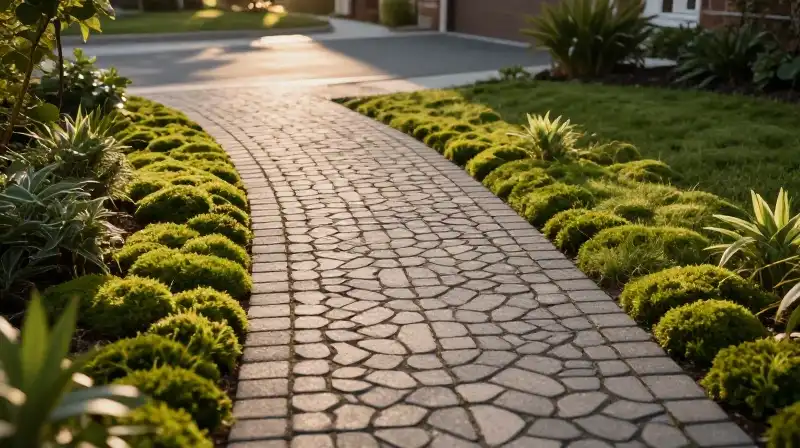
For small driveway landscaping ideas, maximizing visual space while maintaining structural integrity is key. Smaller, thinner paver options can create the illusion of a wider path. Focusing on landscape ideas for driveway borders helps narrow the entry point, making the drive feel more expansive even if the surface area is limited. Using directional patterns (long, linear arrangement) draws the eye toward the home, enhancing the sense of depth.
Low Maintenance and Durability
Many homeowners seek low maintenance driveway landscaping ideas that do not require constant upkeep. Pavers inherently offer excellent durability, but the specific choice of paver can affect maintenance:
- Non-Porous Surfaces: Choose pavers with a slightly textured, less porous finish. These resist staining, efflorescence, and the growth of moss or algae, which are common problems in porous materials.
- Uniform Colors: Using a consistent, solid paver color significantly reduces the visual impact of dirt, oil, or minor cosmetic wear compared to highly variegated mixes.
- Expansion Joints: Regardless of style, ensuring proper, well-maintained expansion joints is the single most effective way to prevent cracking and minimize maintenance needs over time.
The Technical Decision: Materials and Installation
Selecting a paver is not just about aesthetics; it is about performance. The required technical specifications—such as load-bearing capacity and climate suitability—must guide your final choice. Failing to account for these factors can lead to costly repairs.
Load and Climate Considerations
Driveways endure significant stress from vehicles and weather. For main thoroughfares that handle heavy traffic, the paver must have a high compressive strength. Conversely, if the driveway is primarily a pedestrian path leading to a patio, the requirements are less intense, allowing for more decorative, though potentially less robust, options.
Consider your climate. In areas with extreme temperature fluctuations, pavers must be able to expand and contract without shattering. Proper preparation and foundational base layering are critical to mitigate stress.
Material Comparison
Understanding the core materials available allows for a better decision on longevity and cost:
| Material Type | Aesthetic Feel | Best For | Key Consideration |
|---|---|---|---|
| Concrete Pavers | Versatile, modern, highly varied colors. | General use, modern designs. | Requires consistent installation to prevent shifting. |
| Natural Stone | Rustic, organic, luxurious. | Borders, accent areas, upscale entrances. | More porous; maintenance involves sealing and cleaning. |
| Brick Pavers | Traditional, classic, warm. | Residential, period homes, classic layouts. | Pattern and laying technique define the final look. |
Choosing Driveway Design Based on Personal Preference and Budget
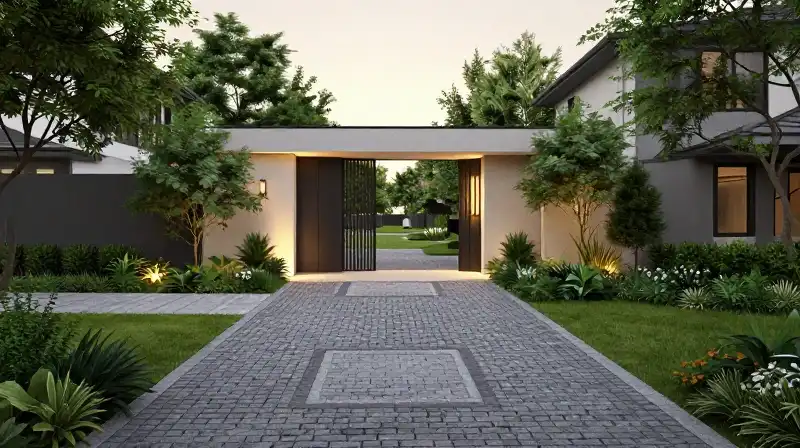
Once the technical and stylistic needs are addressed, personal preferences and budget become the primary filtering factors. Even with infinite “driveway landscaping ideas,” the practical limitations of your wallet and the level of labor you are willing to perform must inform the decision.
A high-end, intricate mosaic or a complex pattern will inherently increase material costs and labor time significantly. Conversely, a simple, solid-color path using standard rectangular pavers provides substantial visual improvement at a lower entry cost. Determining the desired aesthetic—whether it leans toward a cheap driveway landscaping ideas approach or an elegant, high-design solution—is the final determining step.
Final Paver Selection Criteria
Successful driveway design hinges on marrying visual appeal with practical resilience. When finalizing your paver choice, evaluate the options based on these three priorities:
- Context: Does the paver complement the architecture and the landscape surrounding it?
- Function: Is the paver strong enough for the intended use (pedestrian only vs. heavy vehicle traffic)? Does it have drainage properties that suits your lot?
- Longevity: Does the material offer the expected lifespan with manageable maintenance?
Focus on these criteria, and your chosen paver will not only look great but will serve as a durable, visually appealing foundation for your property for many years.
How to Select the Ideal Paver for Your Driveway
Analyze Architectural Style
Analyze the existing architectural style of your home (Modern, Traditional, or Rustic) to determine the paver aesthetic that will create the most cohesive and harmonious look.
Evaluate Functional Constraints
Consider the physical constraints of your lot, assessing if the driveway is a small path, a highly trafficked entry, or a main thoroughfare that requires high compressive strength for vehicle loads.
Assess Technical Requirements
Account for environmental factors such as climate, ensuring the paver can handle temperature fluctuations and that proper foundational base layering is in place to mitigate stress.
Determine Maintenance and Durability
Select materials and finishes that suit your maintenance needs, opting for non-porous surfaces, uniform colors, and properly maintained expansion joints to minimize upkeep.
Evaluate Budget and Preference
Filter options based on your budget and desired aesthetic, weighing the cost of intricate patterns versus the simplicity of standard rectangular pavers.
Final Paver Selection
Marry visual appeal with practical resilience by evaluating the chosen paver based on Context (architectural fit), Function (load and drainage), and Longevity (expected lifespan and maintenance).
Related Articles