
How Many Cubic Feet in a Yard of Mulch? Bulk vs. Bag Guide

Introduction
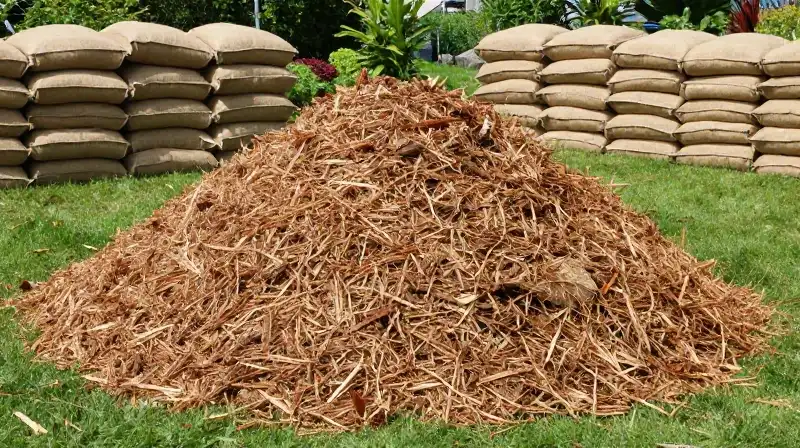
If you are trying to determine the volume of mulch needed for a landscaping project, the question “How many cubic feet in a yard of mulch?” is critical for accurate planning. A standard measurement in the industry, one cubic yard of mulch is equivalent to 27 cubic feet. Understanding this conversion is the foundation for accurately calculating how much product you need, whether you are buying pre-bagged material or ordering a large bulk delivery. While the numerical conversion is straightforward, the choice between bagged mulch and bulk mulch involves much more than just cubic footage. The decision should be based on project size, available delivery logistics, desired quality, and budget.
The Measurement Conversion: Understanding Cubic Feet vs. Cubic Yards
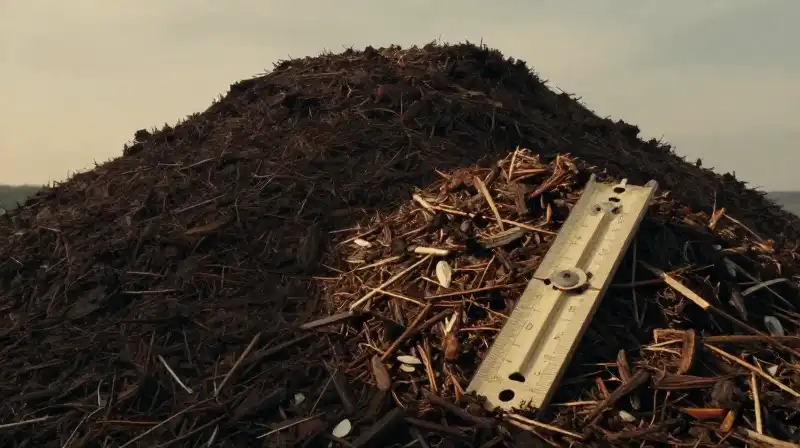 In the context of landscaping, cubic yards (yd) are the most common unit for large-scale projects, while cubic feet (cu ft) are used for detailed calculations and smaller batches. * **1 Cubic Yard = 27 Cubic Feet.** This is the fundamental conversion factor. * **Small Measurements:** For reference, a small landscaping scoop or highly localized small-scale delivery might use measurements like 1.5 or 2 cubic feet, which typically equates to one or two standard bagged units. * **Bulk Measurements:** Large delivery services often measure mulch in cubic yards, while smaller, local suppliers may measure in “scoops” or “bales.” To help you visualize this conversion, a cubic yard represents a perfect cube with sides measuring 3 feet by 3 feet by 3 feet (3’ x 3’ x 3’).
Bagged vs. Bulk: Logistics and Quality Comparison
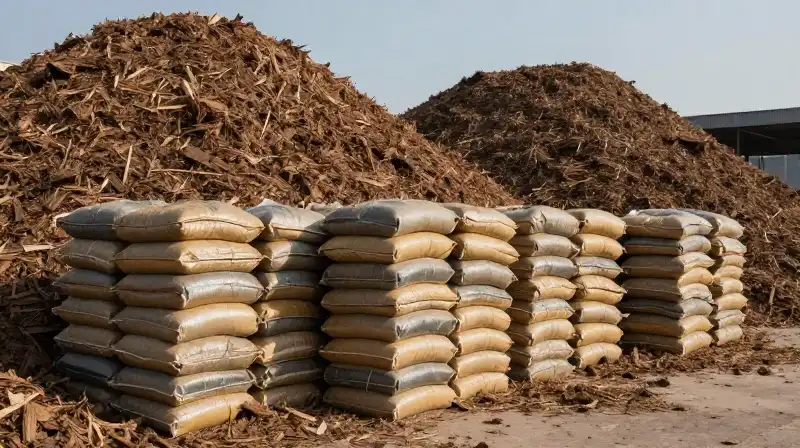 The choice between a single bag of mulch and a bulk delivery system affects cost, convenience, and the final quality of the application. | Feature | Bagged Mulch | Bulk Mulch | | :--- | :--- | :--- | | **Quantity** | Best for small jobs; typically 2–3 cubic feet per bag. | Best for large areas (multiple yards); measured by volume. | | **Convenience** | High for small projects; no large delivery trucks required. | High for large areas, but requires delivery vehicle access. | | **Delivery** | Requires transporting material by hand (wheelbarrow or shovel). | Requires access for large trucks; delivery charges apply. | | **Quality** | Found at major retailers; quality can be inconsistent. | Generally higher quality (source dependent); offered by local suppliers. | | **Cost** | Good for very small, localized projects; may be pricier per cubic yard. | Often more cost-effective for larger quantities, especially when delivery is included. | For projects requiring only 1 to 2 cubic yards, bagged mulch can be a more convenient choice, as it eliminates the need for large delivery logistics and allows for easier manual transport.
Practical Application: Calculating Mulch Coverage
To calculate how much mulch you need, you must understand the relationship between volume (cubic yards) and surface area (square feet) at the desired depth. The industry standard for mulch is typically a 2-inch to 3-inch depth, which provides excellent weed suppression and soil protection. If you apply mulch at a standard 3-inch depth: * **1 Cubic Yard of Mulch** will cover approximately 100 square feet (10’ x 10’). This relationship is crucial for addressing related searches such as “how many square feet does a yard of mulch cover at 2 inches deep.” At 2 inches deep, you would be applying slightly less material, covering roughly 75 square feet per cubic yard.
Specific Buying Scenarios: Matching Bag Size to Yardage
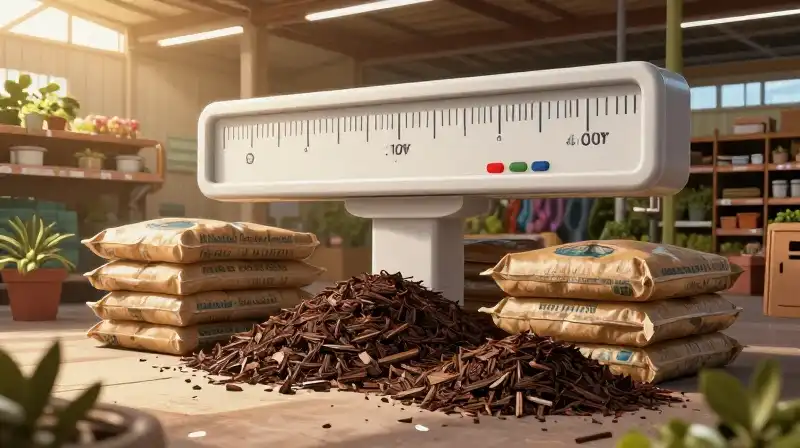 If your project scope falls between a small garden bed and a full yard, understanding how many bags equal a cubic yard helps with precise ordering. A standard 2-cubic-foot bag of mulch typically equates to the following in a bulk yard:
- Approximately 13.5 standard 2-cubic-foot bags in one cubic yard.
- If using smaller 1.5 cubic foot bags, you would need approximately 18 bags per cubic yard.
The specific size of the bag you choose dictates how many units you need to fulfill a specific volume requirement.
Decision Criteria: What Should I Buy for My Project?
To ensure you avoid waste or shortages, use these decision criteria when choosing your mulch source:
- Determine Your Minimum Project Volume: If the need is less than 1 cubic yard, and transportation is manageable, consider bagged options to avoid delivery fees.
- Assess Access: Does your driveway or loading area accommodate a dump truck or large delivery vehicle? If no, bagged mulch is the safer logistical choice.
- Evaluate Budget vs. Labor: While bulk mulch may have a lower per-unit cost, factor in the cost of labor to transport it from the delivery point to your planting areas.
- Prioritize Material Quality: If you are enhancing curb appeal or working in a visible area, sourcing from local landscape suppliers is recommended, as they often provide a superior product compared to big-box retail bagged options.
Practical Final Checklist and Warnings
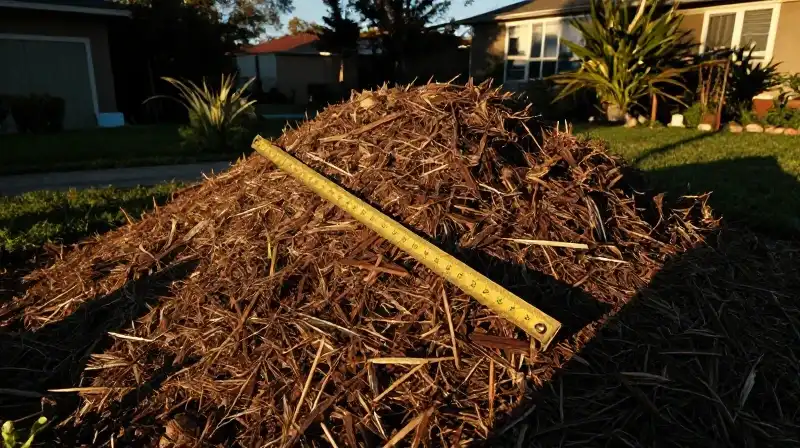 Before committing to a mulch purchase, consider these practical considerations to prevent common errors:
- Check Substrate: If you are mulching over existing grass or weed-filled areas, be aware that mulch only suppresses weeds; it does not instantly remove them.
- Material Consistency: Different suppliers may define a cubic yard slightly differently, particularly when measured in a tipped dump truck versus a controlled bin. Verify the volume measurement with your supplier.
- Depth vs. Coverage: Always specify the desired depth (e.g., 2 inches, 3 inches) when ordering bulk mulch, as the volume needed will fluctuate significantly based on how deep you plan to lay the material.
By knowing that 1 yard equals 27 cubic feet and carefully weighing your project logistics, you can efficiently purchase the correct amount of mulch to achieve professional results.
How to Select the Right Mulch for Your Project
Determine Your Minimum Project Volume
Check if the project needs less than 1 cubic yard; if transportation is manageable, bagged options might be considered to avoid delivery fees.
Assess Site Access
Determine if the driveway or loading area can accommodate a dump truck or large delivery vehicle; if not, bagged mulch is the safer logistical choice.
Evaluate Budget Versus Labor
Compare the per-unit cost of bulk mulch against the cost of labor required to transport it manually from the delivery point.
Prioritize Material Quality
If the mulch is visible or intended to enhance curb appeal, source the material from local landscape suppliers for a superior product quality.
Related Articles