
Composting Cattle Manure: Increasing Nutrient Density and Yield

Introduction
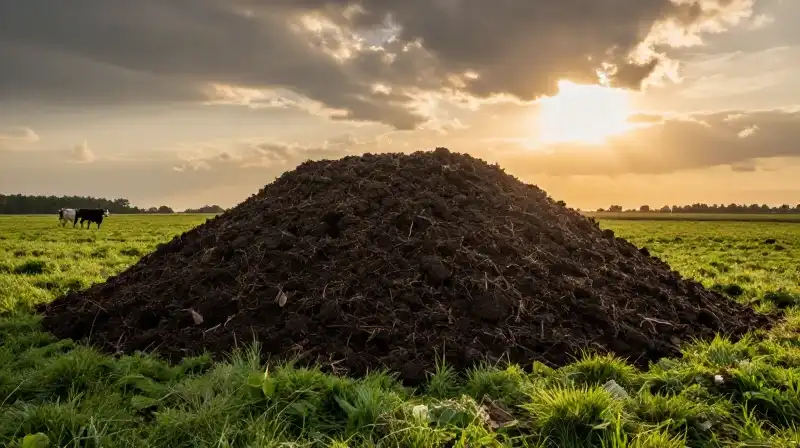
Composting cattle manure is a specialized agricultural process designed to transform unprocessed waste into a highly concentrated, nutrient-rich soil amendment. This methodology addresses major logistical challenges inherent in farming, specifically the high volume and transportation costs associated with raw animal waste. The fundamental goal is not simply disposal, but to stabilize and enrich the manure, significantly increasing its nutrient density and allowing its beneficial application to distant fields that might lack specific soil nutrients like phosphorus or potassium.
Scientific research confirms that this aerobic decomposition process is highly effective. By maintaining controlled environmental parameters—specifically temperature, moisture, and oxygen—manure undergoes a transformation, reducing its bulk while concentrating its most valuable components. This article explores the mechanics, benefits, and practical requirements of successfully creating and utilizing composted cattle manure to enhance crop yields and soil health.
The Scientific Advantage of Composted Cattle Manure
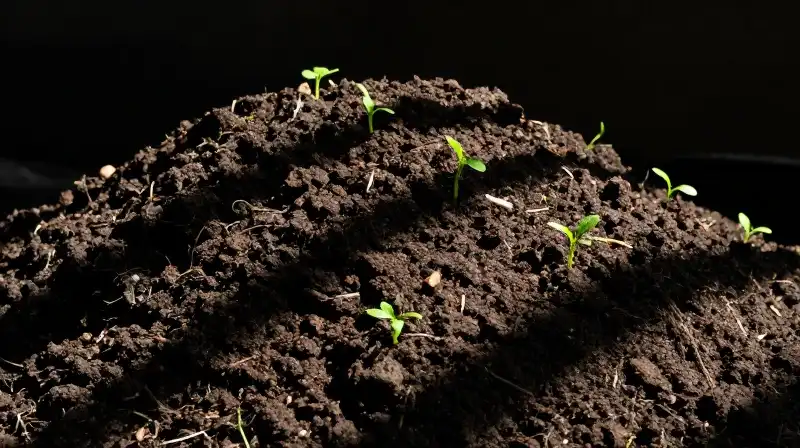
The primary benefit of composting is the concentration of elements. While raw manure contains vital nutrients, they are often diluted by high moisture and volume. The composting process facilitates the transformation of these nutrients into forms that are more readily available to plants. Furthermore, research indicates significant physical improvements in the material:
- Weight and Volume Reduction: Composting can lead to substantial mass reduction, demonstrating weight decreases of up to 53% and volume reductions approaching 28%. This dramatically lowers transport requirements for farmers.
- Nutrient Concentration: Nutrient analysis consistently shows that key elements, particularly phosphorus and potassium, increase significantly in concentration per ton after successful decomposition.
- Moisture Stabilization: Raw manure typically has a moisture content near 66%. The composting process stabilizes and reduces this level, bringing the final product closer to 48%, making it easier to handle and apply uniformly.
This transformation allows farmers to address logistical challenges related to high-volume manure management while simultaneously optimizing nutrient application timing for maximum plant uptake, particularly in demanding crops like corn.
Conditions for Effective Manure Decomposition
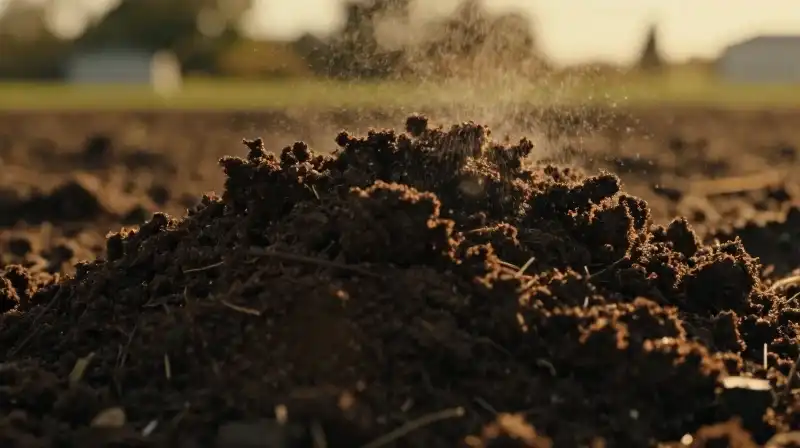
Successful composting is not a passive process; it requires active management of biological and physical parameters to ensure the growth of indigenous microorganisms and the efficiency of the decomposition. This is an aerobic process, meaning oxygen is crucial.
Managing the Decomposing Environment
To ensure efficient transformation, the composting environment must meet specific criteria:
- Temperature Control: Internal pile temperatures must be maintained between 120°F and 140°F. These high temperatures are vital for killing pathogens and ensuring rapid microbial activity.
- Oxygen Supply: The material must be mechanically turned routinely. This turning replenishes the oxygen supply, preventing the process from becoming anaerobic and slowing decomposition.
- The C/N Ratio (Carbon to Nitrogen): This is arguably the most critical factor. An optimal ratio for manure decomposition is generally between 20:1 and 40:1. If the ratio is too low (below 20:1), nitrogen is lost as ammonia; if too high (above 40:1), the process slows significantly. Carbon-rich bulking agents, such as straw or woodchips, are often used to adjust this ratio.
- Moisture Management: Moisture must be carefully regulated, ideally occupying 40–65% of the material’s pore space. Too dry, and microbes stall; too wet, and oxygen cannot reach the materials. The “wet rag test” is a practical field method for checking moisture levels.
Practical Applications and Comparative Efficacy
When assessing the use of composted cattle manure, comparison against raw manure and commercial synthetic fertilizers is necessary to understand its value proposition. Field trials have compared finished compost with raw manure and chemical fertilizers, focusing on nutrient delivery and yield.
| Attribute | Raw Manure | Composted Manure | Commercial Fertilizer |
|---|---|---|---|
| Nutrient Density | High (but diluted) | High (concentrated) | High (specific) |
| Transport/Handling | High logistical burden | Reduced volume/weight | Easy (packaged) |
| Soil Health Improvement | Limited/Variable | Significant (stabilizes soil) | Minimal |
| Crop Yield (Corn/Silage) | Competitive | Competitive | Competitive |
While crop yields in tests, particularly in corn grain and silage, have shown competitive results between compost and raw manure, the compost offers superior advantages in long-term soil health improvement and the ability to move nutrients efficiently to more distant fields.
Addressing Common Questions: Pros, Cons, and Logistics
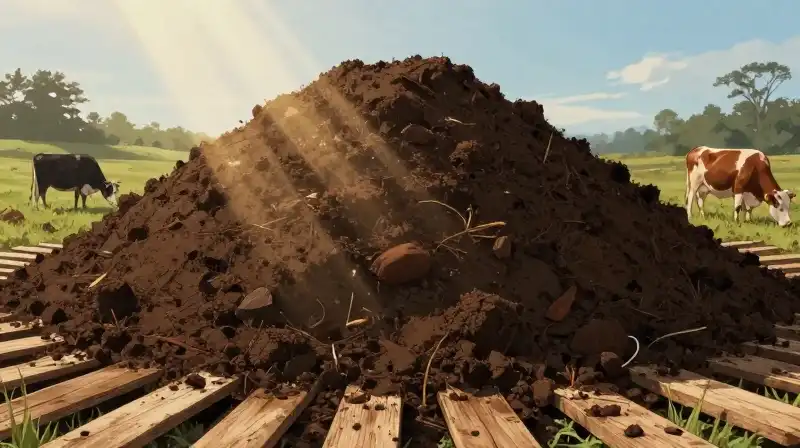
Many users seek practical guidance before committing to using composted cattle manure. Understanding the trade-offs and availability is essential.
What is the main difference between raw and compost manure?
Raw manure is simply fresh waste. Composted manure is biologically stabilized, meaning the nutrients are in a more available and less volatile form, and the material is less bulky and wet.
Composted cattle manure pros and cons?
Pros: Reduced transport costs, enhanced soil structure, concentrated nutrients (P and K), and utilization of waste.
Cons: Requires active management (turning, monitoring C/N ratio), requires significant upfront time/infrastructure, and application timing must be managed correctly.
Composted cattle manure near me or for sale?
The availability depends on regional agricultural infrastructure. Many local farming cooperatives or large-scale manure management operations produce and sell finished compost. Searching for “composted cattle manure for sale” often directs users to these local suppliers.
Practical Summary: Making the Decision to Compost
Composting animal manure represents a sustainable optimization of waste management into a high-value agricultural input. It is not merely a “green” practice, but a sophisticated method of maximizing resource efficiency.
Before implementing this process on a larger scale, consider these practical steps:
- Assess Your Inputs: Determine the existing C/N ratio of your manure. If too rich in nitrogen, source adequate bulking agents like shredded straw to slow the decomposition and prevent nitrogen loss.
- Establish Management Protocols: Invest in tools (probes for temperature, wetting equipment) and commit to a regular turning schedule to ensure aerobic conditions are maintained.
- Understand the Goal: View the process not just as making fertilizer, but as reducing logistical burdens and creating a stable, high-nutrient amendment suitable for distant fields.
- Future Outlook: While initial field trials show competitive yields, long-term economic analysis must account for the full lifecycle of the process—from labor and machinery costs to the reduced need for commercial fertilizer.
By mastering the environmental parameters of composting, a farm can efficiently transform high-volume, low-value waste into a concentrated, powerful soil amendment that improves crop resilience and nutrient availability.
How to Compost Cattle Manure
Assess and Adjust Inputs
Determine the existing Carbon to Nitrogen (C/N) ratio. If too nitrogen-rich, add carbon-rich bulking agents like shredded straw or woodchips to achieve an optimal ratio between 20:1 and 40:1.
Establish Management Protocols
Invest in necessary tools (such as temperature probes and wetting equipment) and commit to a regular turning schedule to manage the composting process.
Manage Moisture Content
Carefully regulate the moisture level to keep it within 40–65% of the material's pore space. Use the "wet rag test" to ensure the microbes are active but the material remains breathable.
Control Temperature
Maintain the internal pile temperature between 120°F and 140°F. This high temperature is crucial for ensuring rapid microbial activity and killing potential pathogens.
Ensure Oxygen Supply
Mechanically turn the material routinely. This action replenishes the oxygen supply, preventing the material from becoming anaerobic and slowing the decomposition process.
Related Articles