
Guide to Identifying Ground Squirrel Holes vs. Other Burrow Types

Introduction
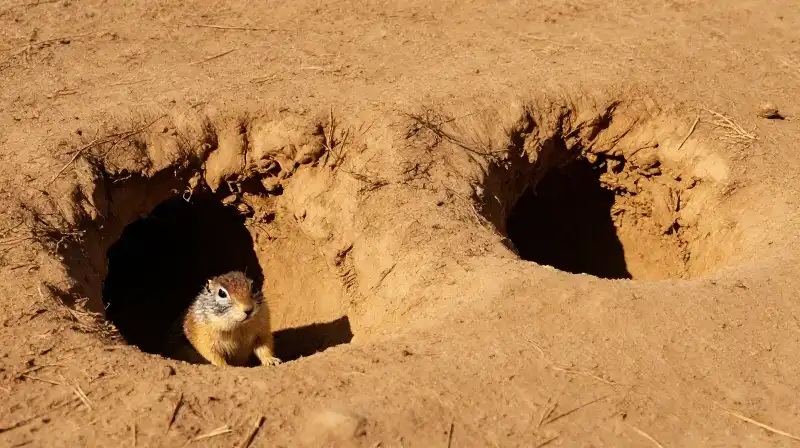
Identifying whether a hole in your yard belongs to a ground squirrel or a different burrowing creature requires looking beyond simple size. While soil depressions and generic divots are common, ground squirrel activity presents a distinct signature characterized by specific landscaping impacts and deep, expansive tunnel systems. Successfully distinguishing a ground squirrel hole from other pests like rats, chipmunks, or voles relies on examining multiple factors simultaneously: the cleanliness of the soil, the spatial arrangement of the burrows, and the overall structural nature of the entrance. Understanding these nuances allows homeowners and gardeners to accurately assess the type of infestation they are dealing with, ensuring appropriate preventative measures and maintenance.
The Distinctive Characteristics of Ground Squirrel Burrows
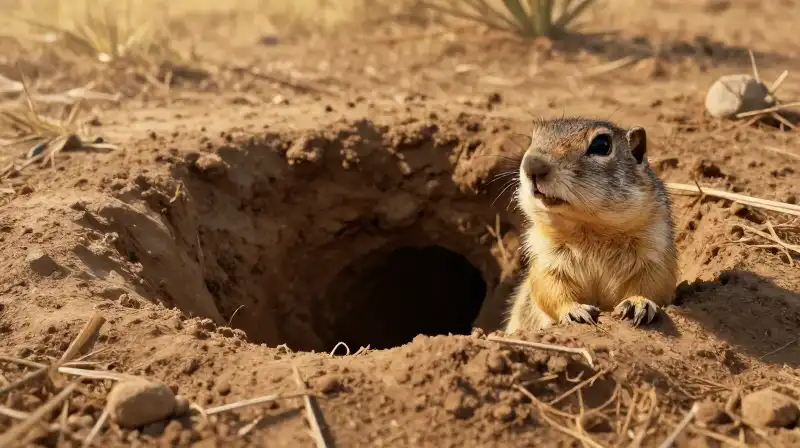 Ground squirrels construct highly recognizable and extensive subterranean networks. These burrows are typically more complex than the simple holes created by many common lawn pests. The primary characteristic of a ground squirrel hole is the extreme cleanliness of the immediate exterior. Unlike animals that push loose dirt or leave surrounding soil disturbed, ground squirrels maintain an area that lacks surrounding excavated soil. These entrances are often surrounded by worn grass, indicating repeated passage and use. Key structural elements of these tunnels include:
- Size and Scale: Individual entry points (burrow entrances) are usually small, generally around two inches in diameter.
- Depth and Complexity: These animals create extensive tunnel systems and dens that can reach lengths of 15 to 20 feet, often featuring multiple entrances spread across the property.
- Arrangement: Ground squirrels frequently maintain multiple similar-sized holes that may be located within a 20-foot proximity of one another, allowing for a coordinated defense or resource sharing.
It is worth noting that ground squirrels are often visible during warm, sunny conditions, which contrasts with the nocturnal or secretive behavior of pests such as rats or voles.
Ground Squirrel Holes Versus Other Common Burrowing Animals
Accurate identification depends on performing a differential analysis of the hole’s shape, size, and location. Here is how ground squirrel holes compare to other common species:
| Animal | Typical Hole Shape/Size | Key Indicators | Behavior/Location |
|---|---|---|---|
| Ground Squirrel | Systematic, small (2 inches) entrances | Very clean exterior; multiple similar holes near each other; extensive tunnel network. | Seen in sunny conditions; large, comprehensive territory. |
| Chipmunk | Small, roughly defined (silver dollar-sized) | Cleanly dug; usually discrete and singular. | Often found in areas with natural cover. |
| Vole | Small, defined (dime-sized) | Located often near the roots of plants; generally smaller than ground squirrel entrances. | Tend to create smaller, localized burrows. |
| Norway Rat | Smooth, uniform openings | Often repeated, worn access points; lack the “clean” soil indicator of squirrels. | May use several points over time but their tracks and entry points often appear more worn/packed rather than meticulously kept. |
| Skunk | Individual, systematic search points | Hole found in search of grubs or lawn insects; usually not part of a multi-burrow system. | Behavior is targeted and localized. |
| Crayfish | 2 inches wide, often irregular | Found near water sources in lawns, potentially accompanied by a mud tower. | Limited to riparian or wet environments. |
Determining Activity and Presence of Infestation
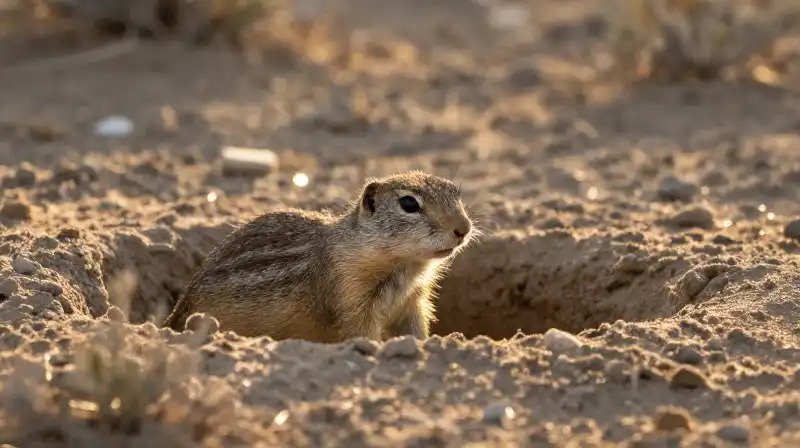 Identifying the hole is only the first step; determining the extent of the issue requires examining the environment. To confirm ground squirrel activity, look for pathways. Ground squirrels often create grooves in the grass, which serve as travel routes between their various burrows. These tunnels can be easily identifiable even before reaching the main entrance. When considering a potential infestation, assess the surrounding conditions:
- Soil Type: Kangaroo rats, for example, are adapted to specific, usually sandy and dry soils. If the soil is consistently wet, other species might be more likely.
- Habitat Interaction: Burrowing near plantings can accelerate the drying of root systems. Signs of extensive tunneling beneath structures may also lead to soil erosion, which can impact building foundations.
Regarding the density of the colony, it is difficult to assign an exact number of ground squirrels to a single hole. However, because ground squirrels establish extensive tunnel networks and multiple entry points, a single cluster of multiple entrances suggests a shared, large-scale habitat for the colony.
Practical Safety Risks and Infestation Management
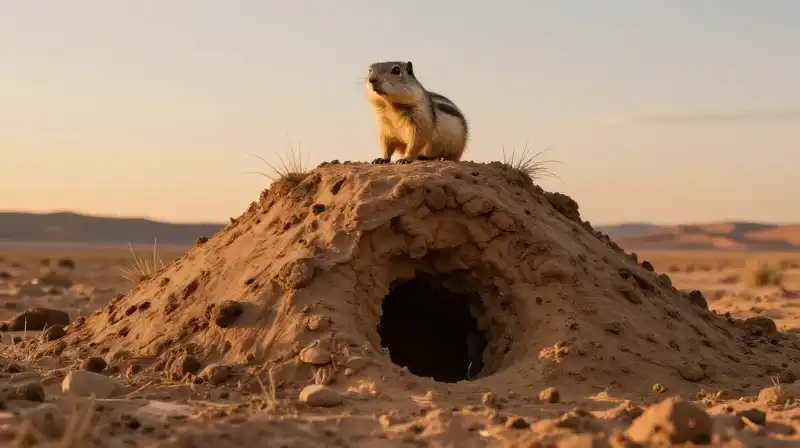 The presence of expansive ground squirrel networks carries several practical risks beyond simple yard disruption.
- Tripping Hazards: The numerous tunnel entrances and associated pathways pose significant tripping hazards in residential yards and gardens.
- Infrastructure Damage: In large infestations, damage to irrigation lines and roots of ornamental trees (girdling) is common.
- Structural Erosion: Activity beneath structures can undermine soil integrity, potentially affecting foundation stability.
Controlling and removing a ground squirrel infestation is challenging due to the expansive and interconnected nature of their underground dens. Because of their extensive reach, mitigation efforts must account for the entire subterranean network, not just the visible entrance.
Decision-Making Synthesis: Field Identification Checklist
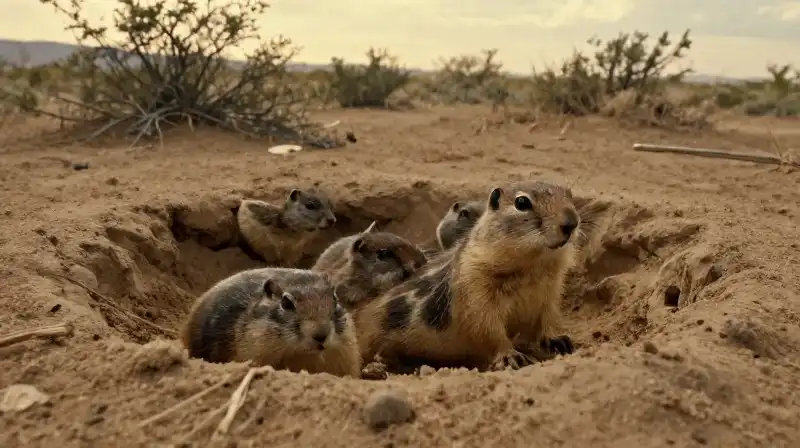 When you find a hole and need to decide if it’s a ground squirrel, apply this hierarchy of criteria:
First, assess the Cleanliness: Is the dirt around the hole pristine, or is it being moved/pushed outward? A “very clean exterior” is a strong signal for a ground squirrel.
Second, evaluate the Arrangement: Is this hole isolated, or are there several other similar-sized, clean entrances within a 20-foot radius? A clustered layout is characteristic of the species.
Third, look for Behavioral Evidence: Do you observe wear in the grass (grooves) leading to the entrance? Is the animal seen during warm, bright daylight?
If the hole is singular, jagged, or appears to have displaced surrounding soil, it is likely a different type of burrowing pest, and you should look for specific signs of that species (e.g., a mud tower near water for crayfish, or a dime-sized entry near a specific root for a vole).
If the area exhibits all three markers—clean soil, clustered entries, and associated pathways—you can confidently identify a ground squirrel hole and initiate a comprehensive management strategy that addresses the whole tunnel system, not just the surface entrances.
Frequently Asked Questions
How many ground squirrels live in one hole?
The article states that it is difficult to assign an exact number of ground squirrels to a single hole. However, because they establish extensive tunnel networks, a single cluster of multiple entrances suggests a shared habitat for the entire colony.
How to Identify a Ground Squirrel Hole
Assess Cleanliness
Examine the soil around the hole to see if the dirt is pristine (pristine soil is a strong indicator) or if it is being moved or pushed outward.
Evaluate Arrangement
Determine if the hole is isolated or if there are several other similar-sized, clean entrances within a 20-foot radius, as ground squirrels typically maintain clustered entry points.
Look for Behavioral Evidence
Observe the area for wear in the grass, such as grooves leading to the entrance, and note if the animal is seen during warm, bright daylight.
Confirm Identification and Strategy
If the area exhibits all three markers—clean soil, clustered entries, and associated pathways—you can confidently identify it as a ground squirrel hole and initiate a comprehensive management strategy that addresses the whole tunnel system.
Related Articles