Growing Roses in Pots: Best Practices for Health and Bloom

Introduction
Container gardening offers an efficient way to cultivate high-quality roses, though success depends entirely on replicating and optimizing the environmental controls of a traditional garden. For varieties like the *Rosa ‘Climbing Iceberg’*, which can become exceptionally vigorous, standard pot sizes are insufficient. The core challenge lies in balancing sufficient root volume, precise watering, and nutrient delivery. This guide outlines the specific technical requirements—from pot dimensions and soil structure to rigorous spacing and feeding schedules—necessary to ensure your roses thrive in confined spaces, producing consistent blooms and maintaining robust health.
Sizing Containers for Optimal Root Health
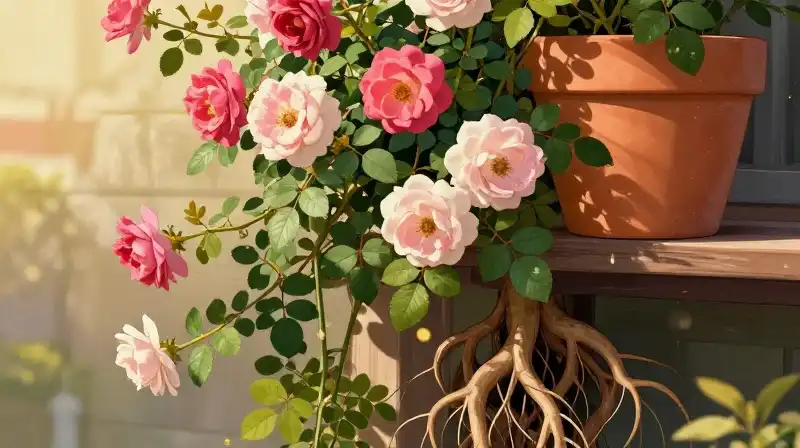 Choosing the right vessel is the first critical step; undersized pots quickly lead to root girdling and stress. A minimum size is required to provide adequate space for the root system of most container roses.
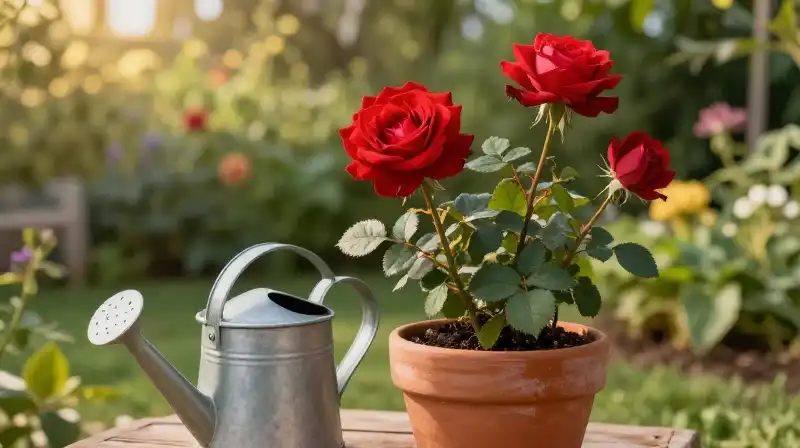
Containers should be a minimum of two feet wide and two feet deep. This dimension ensures that even vigorous growers, including the *Iceberg climbing rose*, have room to establish a healthy, non-root-bound system. Depth is particularly important for stabilizing the plant and supporting a deep, water-retaining root structure. Consider the material as well, as longevity and weight are factors. Glazed ceramic or concrete pots are highly recommended due to their durability and heat retention capabilities, which benefit roots, while traditional plastic containers may dry out too quickly.
Proper drainage is non-negotiable. Every container must include adequate drainage holes to prevent water stagnation, which is the primary cause of root rot. If the pot lacks drainage, drill multiple holes rather than relying on a single small exit point.
Soil Composition: Beyond Standard Potting Mix
The potting mix is not merely a filler; it is the foundation of the rose’s ability to retain moisture and deliver nutrients to the root zone.
A high-quality potting mix must be enriched with substantial compost. The compost serves to improve water-holding capacity, slowly releasing moisture into the root ball. Never rely on a simple, bagged potting mix alone if your goal is sustained health, especially in drier climates.
When initially planting, avoid the use of granular or time-release fertilizers. These concentrated chemicals can cause nutrient shock or burn the delicate new roots. Allow the compost in the potting mix to provide a slow, steady release of beneficial nutrients as the plant establishes itself.
The Feeding Strategy: Precise Timing for Continuous Bloom
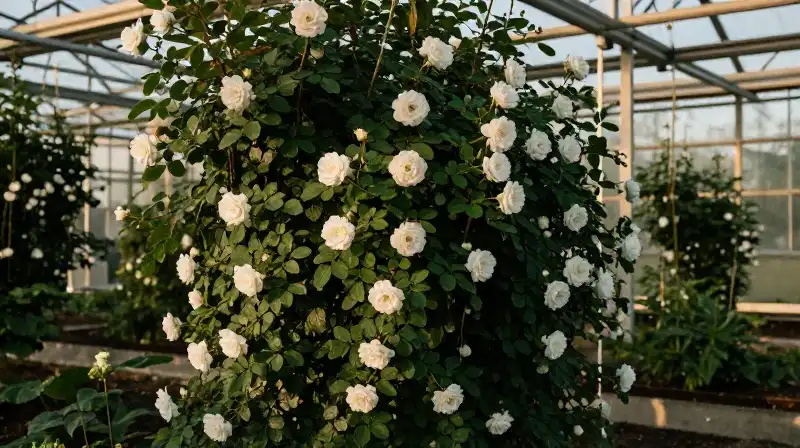 Container roses require a consistent, yet careful, nutrition plan because water-based fertilizers leach out of the limited medium more quickly than in an in-ground setting.
Begin your fertilization routine in the spring, once you observe new active plant growth. Once growth is established, apply fertilizer every two to three weeks. The ideal time to apply fertilizer is specifically after each flush of blooms. This provides the plant with the necessary energy to support a secondary set of flowers.
It is crucial to adjust your schedule based on the season. In colder regions, you must halt fertilization six to eight weeks before the anticipated first frost. This allows the plant time to naturally harden its tissues for winter dormancy, maximizing its chances of surviving the cold.
Calculating Spacing: Technical Rules for Plant Layout
 Planning the layout of a garden, especially for woody plants, requires a precise understanding of their mature size, regardless of whether you are growing a *Climbing Iceberg* or a shrub.
Determine your planting spacing based on the plant’s ultimate width, which will always be provided by the nursery in a specific range. The calculation is always performed “on center,” meaning the distance is measured from the center of one plant to the center of the next.
The distance between plant centers is defined as half of the plant’s eventually achieved width. However, maximum spacing is not a fixed hard limit; if you desire an aesthetic with minimal physical contact between shrubs or roses, you can space plants apart as widely as desired. For a more naturalistic, lush, and aesthetically pleasing look, organize plants in staggered or zig-zag patterns rather than lining them up in straight rows. This horticultural principle applies broadly to all plant categories, from shrubs to trees.
Different climates require different approaches to sizing:
- Warm Climates / Limited Budgets: Select the higher end of the recommended width range to ensure adequate space for aggressive growth.
- Cold Climates: Use the shorter end of the specified range. This allows the plants to fill in faster and provide earlier ground cover before harsh weather sets in.
When calculating distances from existing buildings or structures, it is safest to use the larger end of the recommended plant spacing range.
Addressing Common Container Rose Issues
Maintaining a container rose requires vigilance regarding hydration and location.
Sunlight Requirements: A sunny location is a critical, non-negotiable requirement for successful rose cultivation. Roses demand full sun to photosynthesize effectively and produce high-quality blooms. Insufficient sunlight is one of the quickest ways to lead to “leggy” growth and poor flowering.
Water Management: Roses must be watered regularly to maintain consistent moisture levels in the potting mix. However, absolute saturation must be avoided. The goal is not merely “wet soil,” but properly hydrated soil. Check the moisture level several inches down before watering to ensure you are not over-watering, which prevents drainage and leads to root decay.
Synthesis of Container Rose Success
 Successfully growing roses in containers, such as the sturdy *Iceberg climbing rose*, is a detailed process of controlled environments. Success hinges on three practical priorities: ensuring your pot is appropriately sized (2ft x 2ft minimum) and possesses excellent drainage; adhering to the precise fertilizer timing of Spring and mid-season blooms; and calculating spacing “on center” based on the plant’s specified maximum mature width to achieve your desired aesthetic. By treating your containers as tailored microclimates, you ensure the rose receives the specific conditions needed for both vigorous root development and bountiful, consistent flowering.
Explore more: Dia de los Muertos Skull Designs: Symbols and Artistic Inspi
How to Successfully Grow Container Roses
Select Containers
Choose pots that are a minimum of two feet wide and two feet deep, using materials like glazed ceramic or concrete for heat retention. Ensure all containers have adequate drainage holes to prevent root rot.
Prepare Soil
Mix a high-quality potting soil enriched with substantial compost to improve water retention. Avoid using granular or time-release fertilizers during initial planting.
Calculate Spacing
Determine the planting distance by measuring half of the plant's ultimate width from center to center. Adjust spacing based on climate: use the higher end of the range for warm climates and the lower end for cold climates.
Ensure Optimal Location
Place the container in a location that provides full, consistent sunlight to allow the rose to photosynthesize and produce high-quality blooms.
Manage Watering
Water regularly to maintain consistent moisture, checking several inches down before watering to prevent over-saturation and root decay.
Implement Feeding Schedule
Begin fertilization in the spring when growth is active, applying fertilizer every two to three weeks, specifically after each flush of blooms to support secondary flowering.
Adjust Schedule for Cold Climates
Halt all fertilization six to eight weeks before the anticipated first frost to allow the plant time to harden its tissues for winter dormancy.
Related Articles